
Utility Management
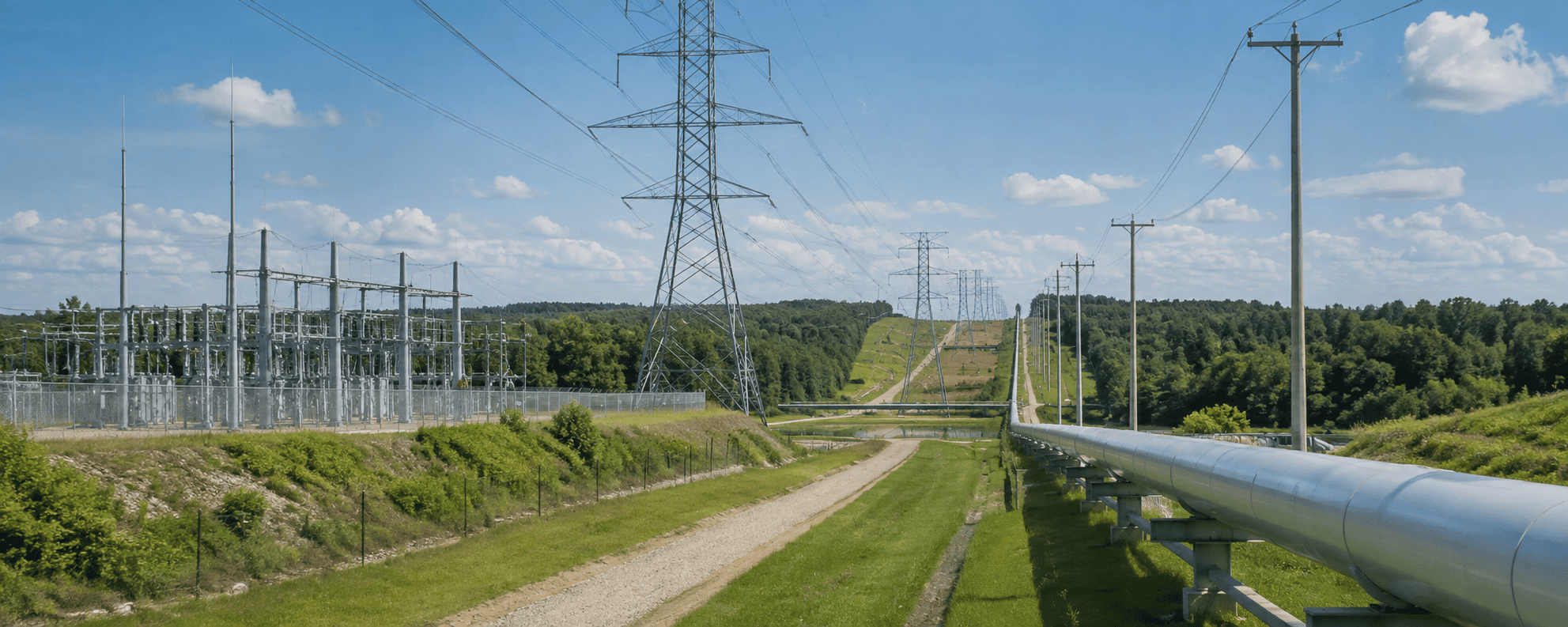
Detailed image data, accurate point clouds, and precise location data support the documentation and analysis of facilities such as power lines, water networks, and other utility infrastructure.
Digital Data Infrastructure for Modern Utility Networks
For utility companies, having a reliable overview of their networks and facilities is crucial. Whether it’s the power grid, water supply, sewer system, gas network, district heating, or other technical infrastructure—maintenance, expansion, and operations can only be managed efficiently if the existing infrastructure is accurately surveyed and up-to-date. With JAWESO’s mobile mapping systems, utility networks can be captured quickly, precisely, and with georeferenced data. High-resolution 360° image data, dense 3D point clouds, precise LiDAR data, and accurate positional data create a robust foundation for network documentation, asset inventory, facility management, and infrastructure management. This provides network operators, municipal utilities, engineering firms, and planning departments with up-to-date geodata that can be used for technical assessments, planning, and operational decisions.
Accurately map lines, facilities, and network infrastructure
Utility infrastructure consists of many different components. These include power lines, overhead lines, pipelines, water networks, sewer systems, gas lines, district heating lines, manholes, fire hydrants, cable routes, utility poles, utility boxes, substations, valves, fittings, and other technical installations in public spaces. Mobile mapping allows these objects to be systematically documented in the vicinity of roads, paths, operational areas, or urban infrastructure. The combination of image data and spatial measurement data helps to better capture the existing infrastructure, locate facilities, and clearly depict the spatial situation. This is a major advantage, especially for extensive networks. Instead of compiling individual pieces of information from various plans, photos, or inventory lists, a unified digital data foundation is available.
Effectively integrating image data, point clouds, and geodata
For utility company management, purely visual documentation is often insufficient. What is needed is data that is both clear and measurable. This is precisely where JAWESO systems offer a distinct advantage: high-resolution 360° panoramic images show the current on-site conditions, while LiDAR point clouds provide precise spatial information. Using GNSS, IMU, and other positioning technologies, the data is georeferenced and can be precisely mapped. This results in high-quality geodata for GIS, CAD, BIM, asset management, digital mapping, and technical documentation processes. Distances, elevations, object positions, utility routes in the visible environment, and relationships with adjacent infrastructure can thus be analyzed more effectively. This facilitates the assessment of existing networks and improves the data foundation for future measures.
As-built documentation for operations and network planning
Up-to-date asset documentation is essential for utility companies. It serves as the foundation for maintenance, expansion, modernization, and the coordination of infrastructure projects. With JAWESO, visible assets and relevant objects in the network environment can be digitally recorded and documented for the long term. This supports, among other things, network planning, asset documentation, object inventory, line documentation, inventory data collection, and long-term network management. Up-to-date inventory data is also of great value for construction projects, relocations, expansions, or coordination with municipalities and civil engineering firms. For municipal utilities, network operators, and technical departments, this means greater transparency regarding their infrastructure and a better foundation for internal processes.
Detect issues more quickly and assess risks more effectively
Another key benefit is the improved ability to identify anomalies and potential problem areas. Visible damage to infrastructure, changes in the surrounding environment, obstacles, vegetation near power lines, or critical situations at access points, manholes, or technical facilities can be clearly documented in the data. This supports fault detection, condition assessment, risk assessment, and the planning of corrective actions during ongoing operations. Even if not every technical malfunction is purely visually detectable, good digital documentation helps to understand contexts more quickly and better assess situations on-site. This is particularly important for large networks in order to set priorities and plan measures more effectively.
Organize maintenance planning and maintenance more efficiently
Reliable maintenance planning requires up-to-date information about facilities, locations, and the visible condition of the grid. When this information is available in a digital and structured format, maintenance activities can be better coordinated and maintenance processes managed more efficiently. With the collected data, utility companies can better understand maintenance needs, prepare for field operations, and make more informed decisions. This aids in maintenance, asset monitoring, network management, and ensuring long-term supply security. Additionally, on-site visits can be reduced because many issues can be assessed digitally first. This saves time, improves coordination between departments, and ensures a more efficient use of personnel and resources.
Support for GIS, asset management, and digital processes
The collected data can be integrated into existing digital systems and reused for various specialized applications. This is particularly relevant for GIS data, asset management, network information systems, structural documentation, infrastructure management, and municipal or operational data platforms. As a result, the use of the data is not limited to mere collection. Rather, it creates a digital foundation that connects various areas of work—from operations and technology to planning and documentation, all the way to strategic investment decisions. Such information is also becoming increasingly important in the context of digital twins, smart infrastructure, and modern data-driven processes.
Strengthening Energy Security Through Better Decision-Making
The better the data foundation, the more reliably networks can be operated and developed. Up-to-date information on utility infrastructure helps identify risks early on, prioritize maintenance measures effectively, and plan investments strategically. For utility companies, municipal utilities, network operators, and technical service providers, this means a better basis for decision-making in daily operations as well as for long-term network strategies. At the same time, well-documented facilities and structured asset data help reduce downtime and improve supply reliability in the long term.
Kontakt
Kontaktieren Sie uns für Angebotsanfragen, Fragen oder eine persönliche Beratung.