
Urban Planning and Development
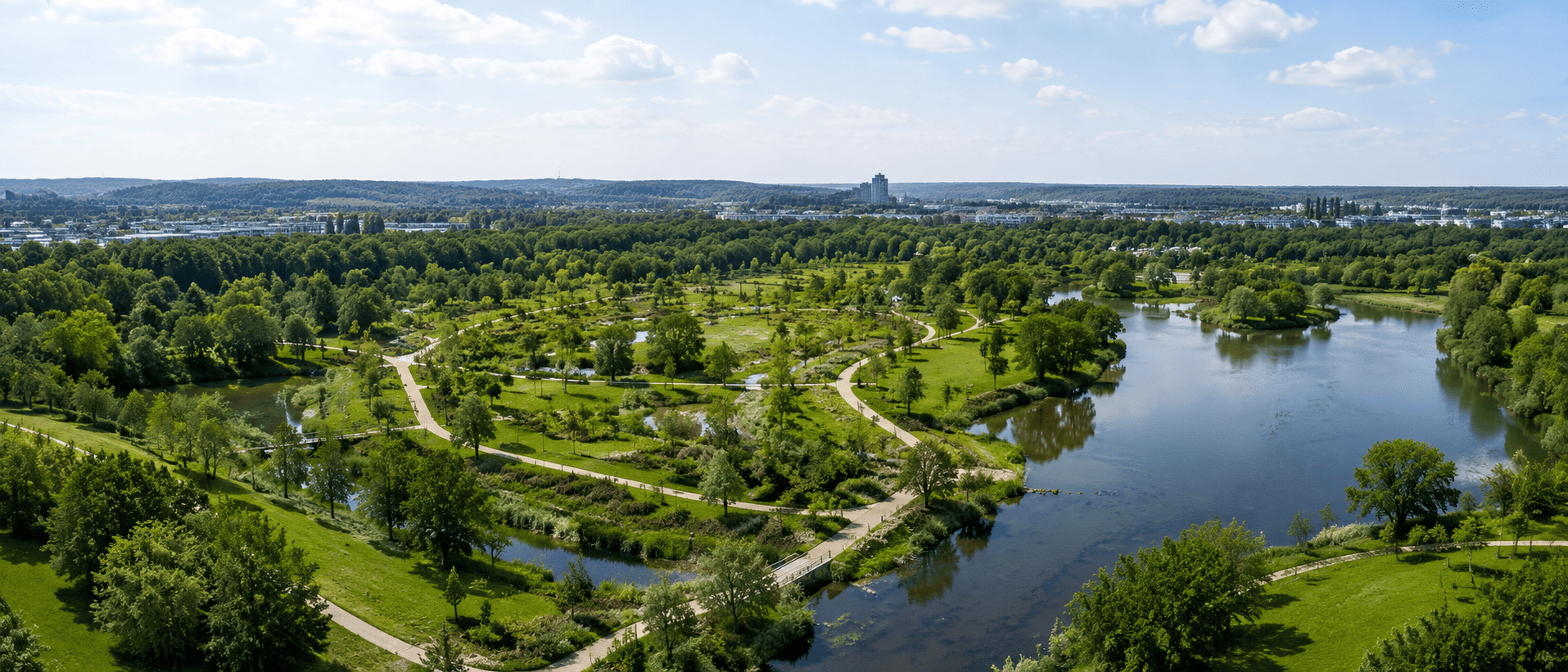
Detailed digital twins of urban environments
Digital Foundations for Modern Urban Planning
Cities are constantly changing. New mobility concepts, growing demands on public spaces, climate adaptation, accessibility, and better use of existing land present urban planners and developers with ever-changing challenges. To ensure that planning is not based on outdated maps or incomplete existing data, an up-to-date and precise digital foundation is essential. With JAWESO’s mobile mapping systems, urban environments can be captured quickly, in detail, and with georeferenced data. High-resolution 360° image data, precise LiDAR point clouds, and accurate positional data make it possible to realistically map street spaces, squares, traffic areas, green spaces, and urban infrastructure. This creates a robust database for urban planners, urban developers, municipalities, planning firms, engineering firms, and GIS departments.
Gaining a Better Understanding of Urban Spaces
In a city, a street is rarely just a roadway. It serves as a traffic area, a public space, a delivery zone, a bike path, a sidewalk, a parking area, and often a green space all at once. For effective planning, these uses must be considered in context. JAWESO supports the digital mapping of street spaces, sidewalks, bike paths, curbs, parking areas, bus stops, traffic lights, traffic signs, street lighting, trees, green spaces, and other elements in public spaces. The data not only shows what exists but also where objects are located and how they relate to one another spatially. This aids in inventorying, traffic planning, land-use planning, and the assessment of public spaces.
Digital Twins for Cities and Municipalities
The captured image and measurement data can be used to create a digital twin of the urban environment. This digitally maps real streets, squares, buildings, and infrastructure elements, making them usable for planning, analysis, and management. A digital twin of the city supports, for example, the development of smart city applications, 3D city models, traffic concepts, neighborhood developments, or long-term urban development strategies. This allows plans to be better visualized, compared, and coordinated. This is a major advantage, especially for municipalities: different departments can access the same digital data foundation—from urban planning and civil engineering to transportation, green space management, and administration.
Geodata for planning, design, and visualization
For many urban development tasks, data that is both visual and measurable is essential. The 360° panoramic images show the actual on-site conditions. The 3D point clouds provide precise spatial information on elevations, distances, areas, object locations, and street cross-sections. This geodata can be reused in GIS systems, CAD applications, BIM processes, municipal specialized systems, or planning software. This allows for better preparation and tracking of designs, alternatives, and measures. Whether it’s new bike paths, the redesign of public squares, the adjustment of traffic routing, or the enhancement of public spaces—up-to-date digital as-built data creates a solid foundation for planning and decision-making.
Make effective use of land and improve transportation planning
In many cities, available space is limited. At the same time, demands are growing: more space for pedestrians and cyclists, efficient transportation systems, safe crossings, accessibility, green spaces, a pleasant environment, and functional infrastructure. Mobile mapping, LiDAR scanning, and georeferenced image data allow for a more precise analysis of existing areas. Where is there sufficient space? Where do conflicts arise between road users? Where are safe paths, markings, or accessible crossings lacking? The data supports mobility planning, bike path planning, pedestrian path planning, parking space analysis, public transit planning, and the optimization of transportation systems. This enables cities to use their space more effectively and better design public spaces.
Targeted improvements to public spaces
Good urban development also means making spaces more livable. Squares, streets, and green spaces should not only be functional, but also safe, accessible, and attractive. JAWESO’s mobile mapping data helps accurately identify existing infrastructure: street furniture, lighting, signage, trees, green spaces, curbs, bus stops, markings, and other objects can be digitally documented. This information supports urban design, neighborhood development, maintenance planning, and the long-term management of urban infrastructure.
Urban development based on up-to-date data
Many planning processes become easier when all stakeholders work with the same up-to-date data. Instead of having to piece together individual photos, outdated plans, or scattered information, a unified digital foundation is available. With JAWESO, cities, municipalities, and planning firms can accurately capture urban spaces, analyze them more effectively, and visualize them in a more understandable way. The combination of 360° image data, LiDAR, 3D point clouds, geodata, and digital workflows creates a reliable foundation for modern urban planning and development. This enables the targeted advancement of land use, transportation systems, public spaces, urban infrastructure, and digital twins.
Kontakt
Kontaktieren Sie uns für Angebotsanfragen, Fragen oder eine persönliche Beratung.