
Infrastructure Inspection and Maintenance
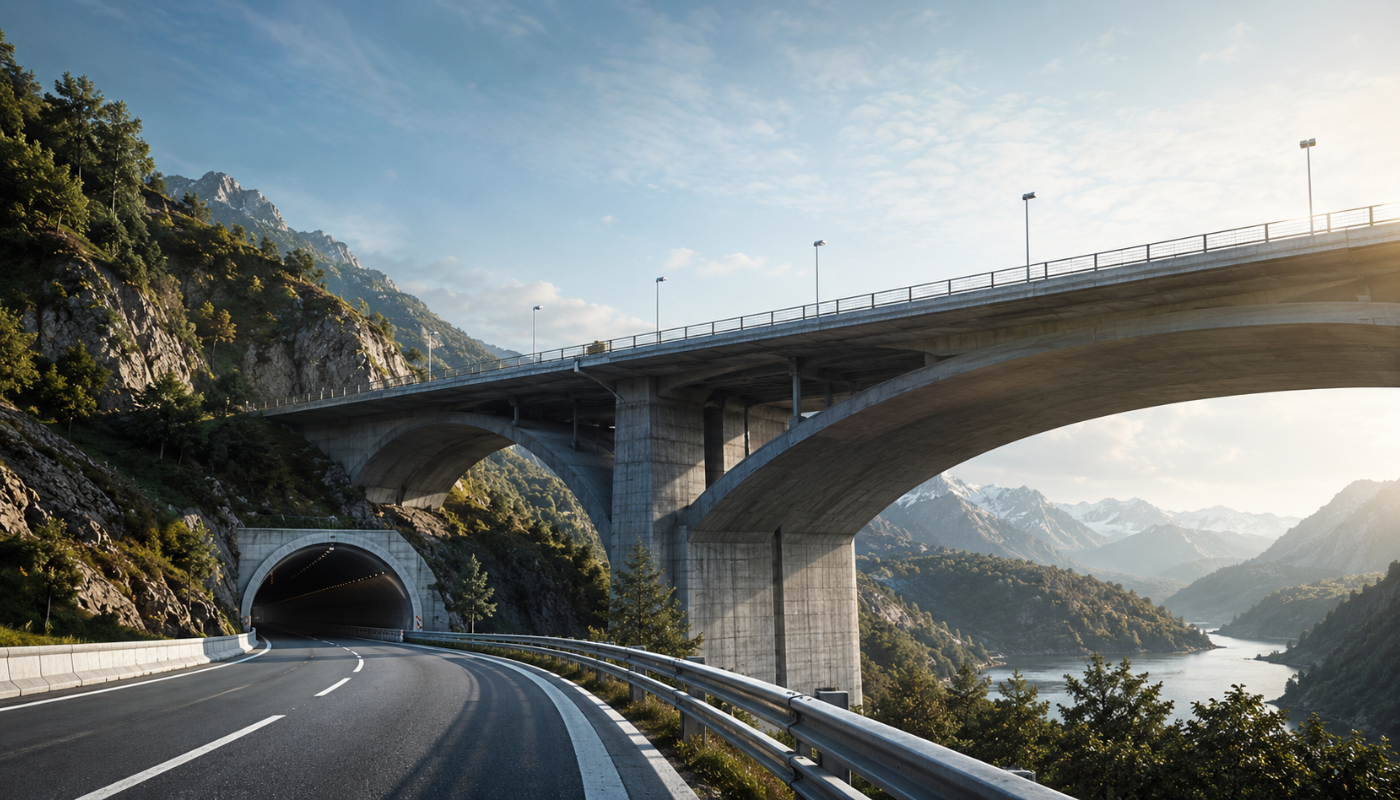
High-resolution images and precise point cloud data
Digital Infrastructure Inspection Using Mobile Mapping
Roads, bridges, tunnels, and traffic areas must be regularly inspected, documented, and maintained. For municipalities, road authorities, infrastructure operators, engineering firms, and surveying firms, having an up-to-date and reliable data foundation is particularly important. This is exactly where JAWESO comes in: Using modern mobile mapping technology, infrastructure can be captured quickly, precisely, and digitally. Instead of manually inspecting individual areas or conducting spot surveys, the process generates high-resolution 360° image data, LiDAR point clouds, and georeferenced information. This data forms the foundation for digital condition assessment, asset documentation, damage analysis, and subsequent maintenance planning.
Surveying roadways, structures, and traffic areas
The solution is suitable for many areas of transportation infrastructure. These include roadways, sidewalks, curbs, bridges, tunnel sections, guardrails, road markings, traffic signs, traffic lights, utility poles, noise barriers, drainage systems, and adjacent green spaces. Mobile data collection offers a significant advantage, particularly for large road networks, urban street environments, or hard-to-access facilities. Extensive areas can be surveyed in a short amount of time without requiring a new on-site visit for each individual issue. The collected information is then available in digital form and can be used for road inspection, bridge inspection, tunnel inspection, traffic area documentation, and infrastructure management.
Identifying damage, wear and changes
One key application is the detection and documentation of damage. Cracks in road surfaces, potholes, surface damage, damaged traffic signs, worn road markings, deformations, elevation differences, or obstacles in the traffic area can be accurately recorded using image and point cloud data. Bridges, tunnel walls, roadside areas, and technical infrastructure can also be assessed more accurately. If road sections or structures are surveyed regularly, changes over time can be compared. This supports condition assessment, damage mapping, rehabilitation planning, and long-term maintenance management.
Precise measurement data using LiDAR, GNSS and 360° imaging
A simple photo is often not enough to reliably assess infrastructure. That is why JAWESO combines visual image data with precise spatial measurement data. The 360° panoramic images show the actual condition of the surroundings, while LiDAR sensors generate dense 3D point clouds. Using GNSS, IMU, RTK-GNSS, and SLAM technology, the captured data is spatially referenced with high accuracy. This results in geodata that can be reused for surveying, mapping, GIS applications, CAD analyses, BIM processes, and specialized digital systems. Distances, elevations, object positions, cross-sections, and areas can be analyzed directly within the data.
Asset data for planning, administration and asset management
In addition to routine inspections, digital asset surveys also play a major role. Many infrastructure projects require up-to-date information on what structures exist, where they are located, and what condition they are in. With JAWESO, relevant objects in the road environment can be systematically documented: traffic signs, road markings, traffic lights, curbs, guardrails, poles, bridges, tunnels, rail areas, vegetation, and other infrastructure elements. This information can be used for object inventory, road management, asset management, GIS data collection, structural documentation, and municipal applications.
The foundation for digital twins and modern infrastructure processes
The mobile mapping data collected can also be used to create a digital twin. A digital twin provides a virtual representation of real-world infrastructure, making roadways, structures, and technical facilities accessible in a digital format. This is particularly relevant for cities, municipalities, transportation companies, and operators of large networks. The data supports smart city applications, traffic planning, infrastructure monitoring, structure management, geodata management, and long-term investment decisions. Instead of consolidating information from many individual sources, a central, spatially referenced database is available.
More efficient maintenance and better decisions
Effective maintenance starts with reliable information. When the condition of roads, bridges, tunnels, and traffic areas is digitally documented, maintenance measures can be planned more effectively. Damage can be detected earlier, repairs can be prioritized more effectively, and resources can be used more efficiently. For infrastructure operators, this means greater transparency regarding the condition of their facilities. Engineering and surveying firms receive precise 3D data for planning, analysis, and documentation. Municipalities and government agencies benefit from up-to-date geodata, a better overview of the road network, and a transparent basis for decision-making.
Digitally document infrastructure and preserve it for the long term
JAWESO makes the inspection and maintenance of infrastructure more efficient, more accurate, and easier to document. The combination of mobile mapping, LiDAR data collection, 360° imagery, 3D point clouds, geodata, GIS integration, and digital workflows creates a modern foundation for road inspection, bridge inspection, tunnel inspection, asset data collection, and infrastructure management. This allows roads, bridges, tunnels, and municipal facilities to be not only surveyed, but also understood, assessed, and maintained over the long term.
Kontakt
Kontaktieren Sie uns für Angebotsanfragen, Fragen oder eine persönliche Beratung.