
Enviromental Monitoring
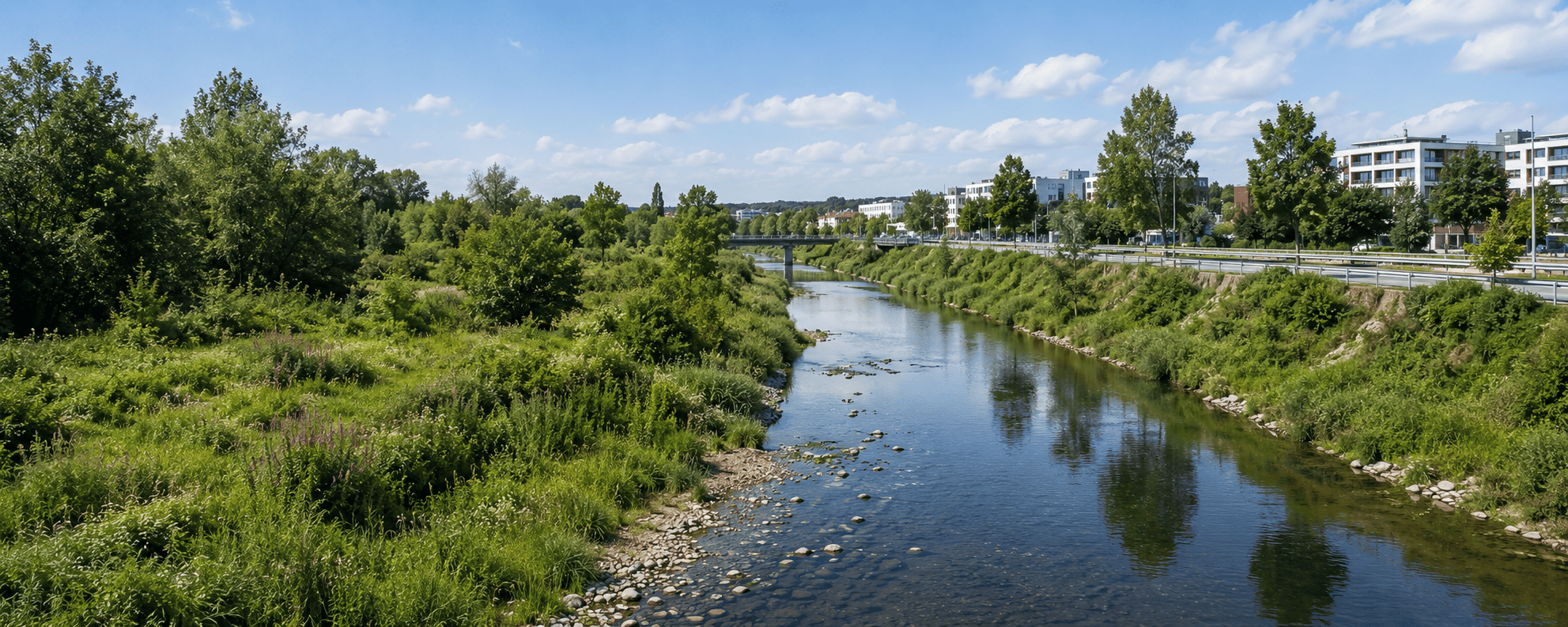
High-resolution, georeferenced images and 3D data help document vegetation conditions, erosion damage, drainage structures, and other landscape changes.
Digitally recording environmental changes along infrastructure
For government agencies, local authorities, and infrastructure operators, environmental monitoring primarily means detecting changes in the environment at an early stage, documenting them reliably, and planning measures more effectively. Particularly along transportation routes, rail lines, roadways, riverbanks, and municipal areas, changes are constantly occurring due to vegetation, weather, land use, erosion, or construction activities. JAWESO’s mobile mapping systems enable the precise and efficient mapping of such areas. High-resolution 360° image data, georeferenced images, LiDAR data, 3D point clouds, and precise position data provide a current foundation for environmental monitoring, vegetation management, tree inventories, land management, and the digital documentation of landscape and infrastructure conditions. This allows environmental conditions to be not only recorded once but also compared and evaluated over extended periods of time.
Monitor vegetation, roadside greenery and green spaces
One key application is the assessment of vegetation conditions. Along roads, railways, waterways, bike paths, farm roads, or in urban areas, vegetation can quickly become a concern—for example, when it obstructs visibility, encroaches on traffic or safety zones, or when maintenance work needs to be planned. JAWESO supports the digital documentation of roadside greenery, tree populations, urban trees, street trees, riparian vegetation, green spaces, embankments, road shoulders, and vegetation along transportation infrastructure. The collected geodata shows where vegetation is located, how areas are developing, and where maintenance or pruning measures may be necessary. This aids in vegetation control, green space management, maintenance planning, infrastructure maintenance, pruning planning, and the long-term monitoring of changes in public spaces.
Tree Registry and Municipal Green Space Management
For cities and municipalities, an up-to-date tree inventory is an essential foundation for the systematic management of urban trees, street trees, green spaces, and vegetated areas. With JAWESO’s mobile mapping systems, tree locations, environmental information, and adjacent infrastructure can be digitally captured and documented with georeferenced data. The captured 360° image data, 3D point clouds, and geodata support tree inventory, tree inspection, tree care, tree care planning, traffic safety, green space administration, and municipal green space management. This is particularly important in urban areas because trees are not viewed in isolation. They are connected to sidewalks, roadways, parking areas, utility lines, signage, lighting, and other elements of urban infrastructure. A digital data foundation helps municipalities better prepare maintenance and inspection measures, update inventory data, and make transparent decisions regarding urban greenery, green spaces, and sustainable urban development.
Documenting erosion, slopes, and riparian areas
In addition to vegetation, soil and water areas are also key components of environmental monitoring. Erosion damage, damaged slopes, altered shoreline areas, sediment deposits, or eroded edge zones can impact transportation routes, water bodies, and adjacent infrastructure. Mobile mapping, LiDAR surveying, and precise 3D data make it possible to spatially track such changes. Shore zones, ditches, culverts, channels, watercourses, and drainage structures can be digitally captured and documented for future comparisons. This creates a reliable foundation for erosion monitoring, water management, drainage management, and the assessment of landscape changes along roads, rail lines, and municipal areas.
Comparing states over time
A particular advantage of digital survey data is that conditions are not merely recorded once, but can be compared over extended periods of time. When specific areas are surveyed regularly, it becomes clear where vegetation is increasing, where slopes are changing, where riverbanks are becoming unstable, or where drainage systems are compromised. The combination of 360° panoramic images, point cloud data, and georeferenced environmental data supports transparent condition documentation. Changes can be precisely located and better assessed. This is particularly relevant for monitoring processes, risk assessment, protective measures, maintenance measures, and the planning of infrastructure and land maintenance work.
Environmental monitoring in urban areas and along transportation routes
Many significant environmental changes occur where nature, urban areas, and infrastructure directly intersect. These include roadside areas, railway right-of-ways, parking lots, urban green spaces, embankments, bridge areas, riparian zones, and drainage systems. With JAWESO, these areas can be systematically surveyed and analyzed. The data is suitable for environmental monitoring along transportation routes, municipal land management, urban green spaces, roadside greenery, rail environments, vegetation management, tree inventories, and the documentation of landscape changes in urban areas. This provides cities, municipalities, and infrastructure operators with an up-to-date digital database that integrates various tasks: maintenance, protection, planning, documentation, and long-term management.
Support for GIS, asset management, and digital processes
The collected data can be integrated into existing digital systems and reused for various specialized applications. This is particularly relevant for GIS data, asset management, network information systems, structural documentation, infrastructure management, and municipal or operational data platforms. As a result, the use of the data is not limited to mere collection. Rather, it creates a digital foundation that connects various areas of work—from operations and technology to planning and documentation, all the way to strategic investment decisions. Such information is also becoming increasingly important in the context of digital twins, smart infrastructure, and modern data-driven processes.
Geodata for maintenance, conservation, and sustainable land management
Individual photos or outdated plans are often insufficient for making informed decisions. What is needed is up-to-date, spatially accurate data that can be imported into existing systems and processed further. The geodata, LiDAR data, 3D point clouds, and georeferenced image data collected by JAWESO can be used for GIS applications, municipal specialized systems, digital documentation, landscape planning, environmental planning, green space management, and infrastructure management. This allows for better analysis of areas, elevations, distances, slope profiles, object positions, tree locations, and landscape structures. Measures for maintenance, pruning, drainage, protection, or restoration can be planned more effectively.
Kontakt
Kontaktieren Sie uns für Angebotsanfragen, Fragen oder eine persönliche Beratung.