
Disaster Response and Recovery
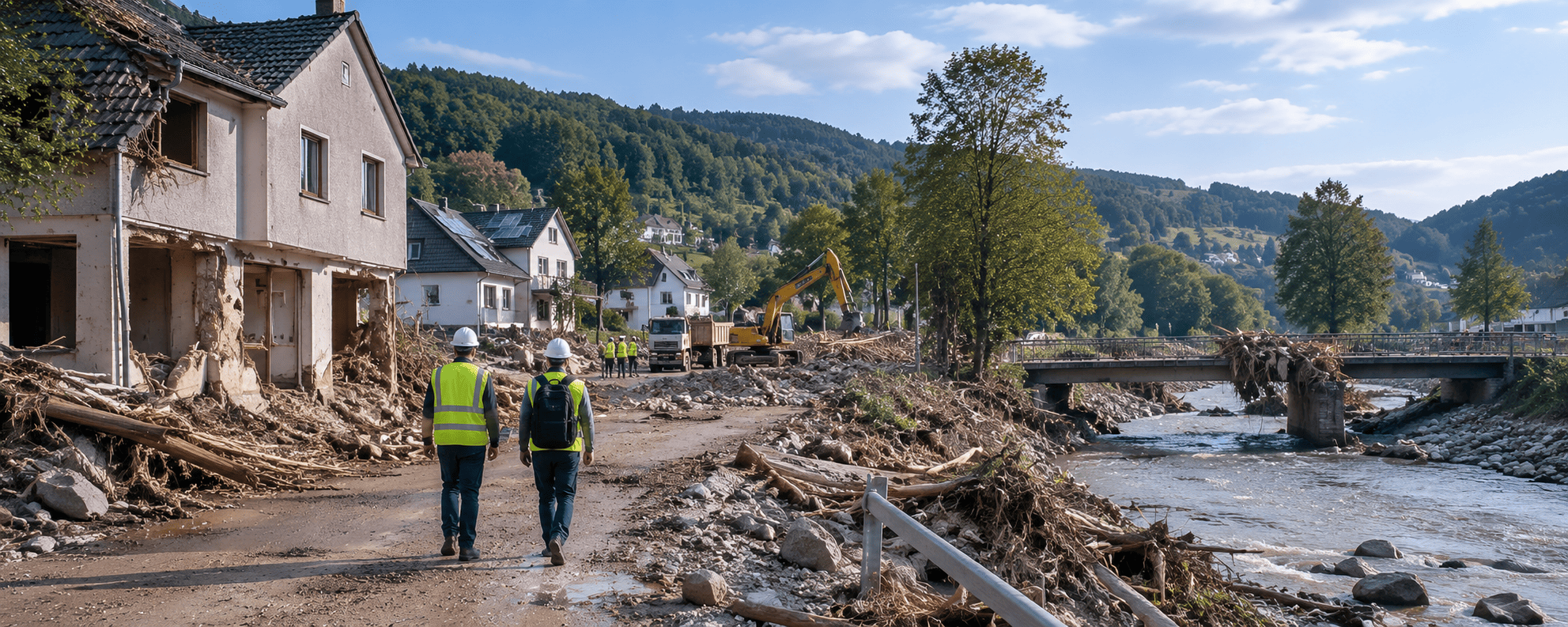
Our mobile mapping systems play a valuable role in disaster relief and reconstruction efforts.
Rapid data collection following incidents
Following natural disasters, severe weather, floods, heavy rainfall events, landslides, storm damage, or other emergency situations, authorities and emergency responders need to quickly identify which areas are affected and where the greatest need for action lies. Especially in the first few hours and days, up-to-date, reliable data is crucial for assessing damage, prioritizing measures, and deploying resources effectively. With JAWESO’s mobile mapping systems, affected areas can be surveyed quickly, precisely, and with georeferenced data. High-resolution 360° image data, precise 3D point clouds, LiDAR data, and exact position data create a digital foundation for damage assessment, disaster documentation, situation analysis, and the planning of reconstruction measures. This allows damage to be not only visually documented but also analyzed in a spatially traceable manner.
Document damage to infrastructure and buildings
Following a disaster, roads, bridges, tunnels, buildings, utility lines, riverbanks, embankments, drainage systems, and public spaces are often affected. For government agencies, municipalities, aid organizations, infrastructure operators, engineering firms, and construction companies, it is crucial to assess the condition of these areas as quickly as possible. JAWESO supports the digital documentation of infrastructure damage, building damage, road damage, damaged traffic areas, blocked access roads, areas affected by scouring, damaged structures, and changes in the terrain. The captured georeferenced image data and point cloud data help to clearly locate affected areas and better assess the extent of the damage. This is particularly helpful for damage mapping, operational planning, reconstruction planning, and the subsequent traceability of decisions.
Situation reports for government agencies and operational planning
In disaster relief, a great deal of information must be gathered quickly. Which roads are still passable? Which bridges or culverts are damaged? Where are there obstacles in the traffic area? Which areas are difficult to reach? Which infrastructure needs to be inspected or restored first? Through mobile mapping, LiDAR scanning, and 360° panoramic images, up-to-date data can be provided directly from the affected areas. This data supports the creation of a digital situational overview, the coordination of operations, the prioritization of relief efforts, and coordination among various stakeholders. For crisis management teams, local governments, and infrastructure managers, this creates a shared information base that makes decisions faster and more transparent.
Geodata for damage assessment and prioritization
In the aftermath of a disaster, it is crucial to prioritize actions effectively. Not every damaged road, bridge, or utility facility requires the same level of urgency. Up-to-date geospatial data helps to spatially map damage and assess affected areas in a targeted manner. The 3D point clouds, LiDAR data, position data, and 360° image data captured with JAWESO can be used for GIS applications, mapping, infrastructure management, risk assessment, and technical analyses. This makes it easier to identify and compare damaged areas and integrate them into existing digital systems. This supports better resource allocation, as personnel, equipment, and materials can be deployed where they are needed first.
Planning and Supporting Reconstruction Efficiently
Once the immediate emergency response is over, the long-term reconstruction begins. This requires reliable information about the condition of infrastructure, transportation routes, buildings, and technical facilities. Digital data collection using JAWESO provides a foundation for systematically planning reconstruction efforts and documenting progress later on. The data can be used for renovation planning, construction planning, repairs, documentation of construction progress, as-built documentation, and comparing conditions before, during, and after reconstruction. This makes it clear which areas have already been restored, where damage still exists, and what measures are still required.
Comparison of conditions before and after the event
Mobile mapping becomes particularly valuable when data from different points in time can be compared. Existing baseline data can be cross-referenced with new imagery captured after a disaster. This makes changes to roads, structures, riverbanks, slopes, or utility infrastructure more clearly visible. This before-and-after comparison supports damage analysis, the documentation of disaster damage, the evaluation of reconstruction measures, and the long-term planning of resilient infrastructure. For municipalities and infrastructure operators, this can provide an important foundation for better monitoring vulnerable areas in the future and planning protective measures in a more targeted manner.
Support for local governments, operators, and aid organizations
Digital mapping of affected areas can assist many stakeholders. Local governments gain a better overview of damage in public spaces. Infrastructure operators can inspect roads, bridges, utility lines, and technical facilities in a more targeted manner. Aid organizations and government agencies benefit from up-to-date information for coordination, prioritization, and operational planning. Engineering firms, surveying firms, construction companies, and planning agencies can also use the data to assess damage, prepare measures, and provide technical support for reconstruction. A shared digital database improves communication among all project and response stakeholders.
Digital Documentation for More Resilient Infrastructure
Disaster relief does not end with the initial damage assessment. The data collected can also be used in the long term to plan more resilient infrastructure. Once it is known which areas were particularly hard hit, future protective measures, drainage plans, traffic management strategies, and structural modifications can be better prepared. JAWESO systems provide a foundation for resilience planning, risk management, infrastructure monitoring, municipal crisis preparedness, and sustainable reconstruction. In this way, acute damage data is transformed into valuable information for future decisions.
Kontakt
Kontaktieren Sie uns für Angebotsanfragen, Fragen oder eine persönliche Beratung.